Cart 0



Medical cannabis is showing promise as a treatment for Autism Spectrum Disorder (ASD), particularly for behavioural challenges like aggression, anxiety, and sleep disturbances. Families often struggle with traditional treatments due to limited effectiveness or harsh side effects. CBD-rich cannabis, with minimal THC, is emerging as an option for managing symptoms, supported by positive findings from observational studies.
While early data is encouraging, larger clinical trials are needed to confirm long-term safety and effectiveness. Medical cannabis should be considered alongside behavioural and educational therapies, under specialist supervision.
These real-life accounts highlight how medical cannabis has supported individuals of various ages in managing challenges linked to ASD. Each case reflects measurable progress over six months, thanks to tailored cannabis treatments. They emphasise the role of personalised approaches in addressing complex ASD symptoms.
An 8-year-old boy faced daily aggressive outbursts and hyperactivity, causing significant disruptions at school and home. Following an evaluation at Elios Clinics, he was prescribed cannabis oil containing 30% CBD and 1.5% THC, with an initial dose of 2.5 mg/mL (three drops twice daily). Over six months, his parents observed a 68.4% improvement in hyperactivity, while assessments showed better social interactions, fewer outbursts, and enhanced participation in class.
A 15-year-old struggling with anxiety and sleep disturbances saw notable changes after starting a CBD-rich oil treatment. Within six months, his sleep improved by 71.4%, and anxiety levels dropped by 47.1%. His parents reported that he fell asleep more easily, woke up less during the night, and showed reduced irritability.
A 28-year-old with difficulties in social interactions and heightened sensory sensitivities sought help from Elios Clinics. GMC-approved doctors devised a personalised treatment plan involving a CBD-enriched extract. After six months, assessments revealed significant progress in social interaction, cognitive functioning, and sensory response, with results showing statistical significance (p < 0.001).
A 10-year-old with ASD and epilepsy exhibited frequent self-harm behaviours and seizures. Elios Clinics adjusted the treatment to a CBD-rich oil with a small amount of THC to manage both seizures and behavioural issues. Six months later, reports indicated a 67.6% reduction in self-injury and anger episodes, along with fewer seizures and less restlessness. The child tolerated the treatment well, with only mild drowsiness as a side effect.
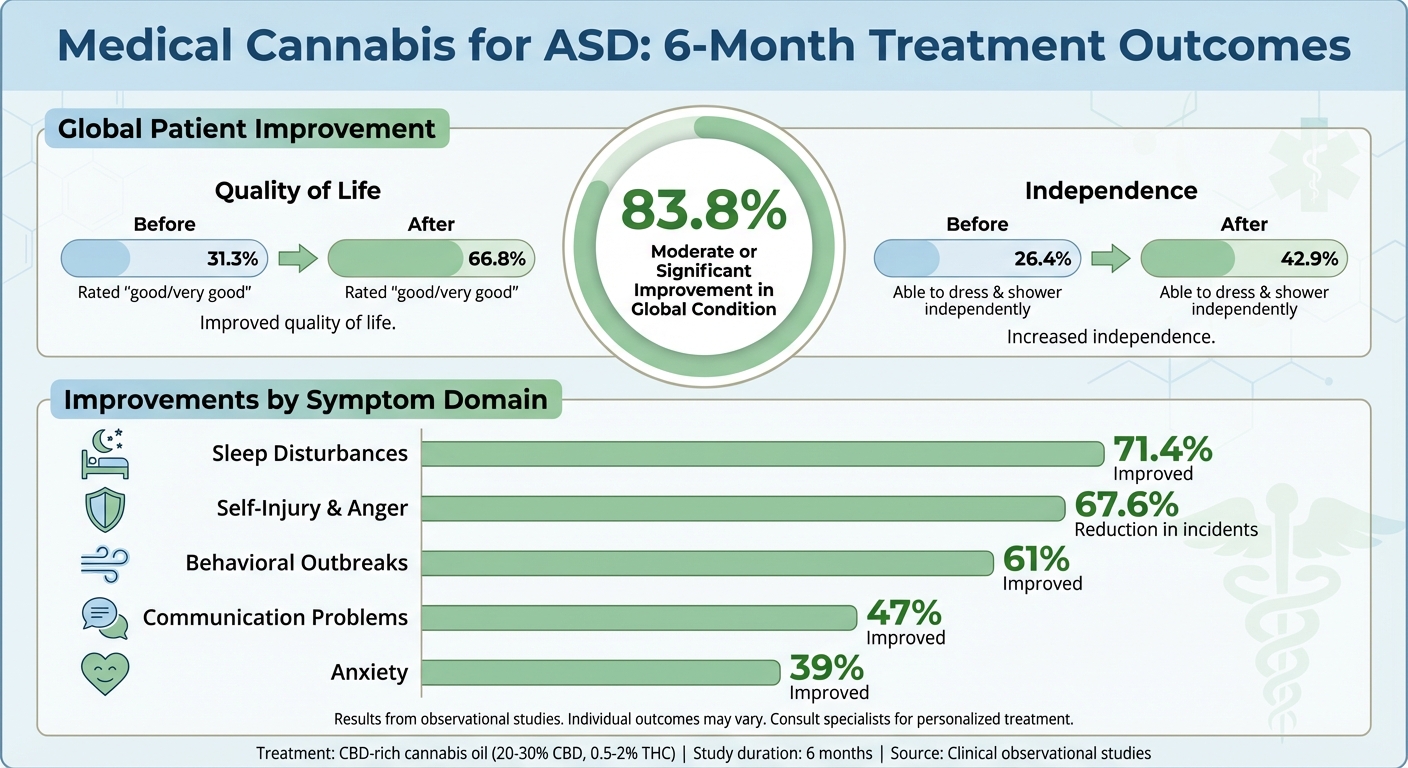
Medical Cannabis Treatment Outcomes for Autism Spectrum Disorder – 6 Month Results
Elios Clinics has adopted a CBD-focused approach for treating autism spectrum disorder (ASD), using oral oils that are rich in CBD (20–30%) and contain low levels of THC (0.5–2%). This method prioritises CBD because research indicates it can help with behavioural challenges, anxiety, sleep issues, and social interactions, all while being well tolerated. Higher doses of THC, on the other hand, are linked to potential side effects like psychoactive reactions or increased agitation, particularly in children. By carefully tailoring treatments, the clinic ensures safety and effectiveness for each patient.
The process begins with a free eligibility assessment and a video consultation. During this session, doctors review the patient’s diagnosis, key symptoms (e.g., aggression, self-injury, or severe anxiety), past treatments, and any additional conditions like epilepsy. Treatment follows a "start low, go slow" method. For children, this typically means starting with a low dose (e.g., 2.5 mg/mL, a few drops twice daily), which is gradually increased based on their response. Adults may begin with slightly higher doses but also follow a cautious, step-by-step titration.
Adjustments to dosage are guided by caregiver feedback and standardised tools that track symptoms like meltdowns, sleep quality, self-injury, and social behaviours. Follow-up consultations, usually scheduled 4–6 weeks after starting treatment, allow doctors to tweak CBD and THC levels, adjust timings (e.g., splitting doses between morning and bedtime for sleep concerns), and address any side effects such as drowsiness or appetite changes. Families are provided with written dosing schedules, complete with instructions on how to administer the medication around school, therapy sessions, and bedtime. This ensures parents and carers can confidently manage the treatment at home.
Studies and clinical data show significant improvements in ASD symptoms after three to six months of CBD-rich cannabis treatment. For instance, a study from Israel revealed a marked improvement in quality of life: the percentage of patients rated as having a "good" or "very good" quality of life rose from 31.3% at the start to 66.8% after six months. Additionally, the number of patients able to dress and shower independently increased from 26.4% to 42.9%.
Further research highlights that 67.6% of patients experienced fewer incidents of self-injury and anger, with side effects generally being mild to moderate. These positive changes are often noticeable within the first few months and tend to stabilise by the six-month mark. The clinic relies on caregiver diaries and standardised rating scales during follow-ups to monitor progress and refine treatment plans.
| Symptom Domain | Pre-Treatment | Post-Treatment (6 months) | Source |
|---|---|---|---|
| Global condition (moderate or significant improvement) | Baseline; no cannabis | 83.8% of patients | |
| Quality of life rated "good/very good" | 31.3% | 66.8% | |
| Behavioural outbreaks improved | Frequent aggressive episodes | 61% of patients | |
| Communication problems improved | Marked difficulties | 47% of patients | |
| Anxiety improved | Significant anxiety common | 39% of patients | |
| Sleep disturbances improved | Frequent night-time wakings | 71.4% of patients |
These results highlight the potential of CBD-rich cannabis treatments to improve the lives of individuals with ASD, while maintaining a focus on safety and ongoing support for patients and their families.
When used as prescribed, medical cannabis for ASD has shown a positive safety record. For instance, a clinical trial involving children with ASD and a CBD-rich cannabis extract reported that only 9.7% (3 out of 31 participants) experienced side effects, all of which were mild. A larger study with 188 children found agitation in 6.6% of cases and drowsiness in 3.2%. Commonly noted side effects include sleep issues, restlessness, and changes in appetite. These effects are generally short-lived and can often be addressed with minor adjustments to dosage or timing. Observational studies also highlight high treatment adherence, with around 80% of patients continuing therapy after six months, indicating that families generally feel the benefits outweigh the mild side effects.
CBD-dominant formulations are particularly well-suited for ASD treatment due to their low likelihood of causing serious side effects. Unlike some traditional psychotropic drugs used for managing ASD-related behaviours – which may lead to significant weight gain, metabolic issues, or emotional dullness – cannabis-based treatments tend to be more tolerable. This safer profile, combined with tailored patient care, further supports its role in managing ASD symptoms.
Elios Clinics offers an ongoing, personalised approach to ensure safe and effective treatment for ASD patients. Regular follow-up consultations, initially every 4–6 weeks and then at longer intervals, allow doctors to gather caregiver feedback, monitor changes in behaviour, sleep, and anxiety, and adjust treatment plans as needed. Education is a key part of their service: families receive guidance on how medical cannabis fits alongside existing behavioural and educational strategies, as well as tips for tracking progress at home and school. This proactive approach ensures that treatment is not only safe but also tailored to each patient’s unique and evolving needs, equipping families for the long-term management of ASD symptoms.
CBD-rich medical cannabis shows early potential in easing some behaviours associated with autism spectrum disorder (ASD), such as aggression, self-injury, anxiety, sleep issues, and disruptive outbursts – when prescribed by specialists under careful monitoring. For instance, a large observational study involving 188 autistic patients treated with CBD-rich oil revealed that after six months, 30.1% experienced significant improvement, while 53.7% reported moderate overall improvement. These benefits included reductions in restlessness, rage attacks, and anxiety.
That said, the current evidence is still limited, relying mostly on observational studies and smaller case series rather than robust, large-scale randomised controlled trials. Ongoing clinical trials aim to provide clearer insights by evaluating cannabinoids for ASD-related aggression, anxiety, and sleep disturbances in rigorous, placebo-controlled conditions. These studies will help determine which individuals benefit most, establish optimal dosing, and assess long-term safety. Until these findings are available, medical cannabis should be seen as a supplementary option rather than a definitive treatment. It should always be used alongside behavioural therapies, educational support, and psychological interventions, with expert guidance ensuring its safe and appropriate application.
In the UK, families and individuals with ASD are encouraged to consult specialists for tailored advice. Elios Clinics, for example, offers a structured, safety-oriented service, including eligibility assessments, video consultations with GMC-registered doctors, personalised treatment plans, and close follow-up care. This ensures that cannabis is prescribed only when appropriate, with careful attention to dosing, potential interactions, and side effects. Such regulated care is especially critical for vulnerable groups like autistic children and adults, where quality control and patient-centred decision-making are essential.
Looking ahead, the future of ASD care will likely combine behavioural, educational, pharmacological, and cannabinoid-based treatments. As research progresses, it may become clearer which subgroups – such as those experiencing severe aggression, self-injury, or co-occurring epilepsy – are most likely to benefit. Medical cannabis could then emerge as a targeted option to address behaviours that significantly impact quality of life and participation. However, integrating this treatment into routine ASD care will require improved UK guidelines, enhanced clinician training, and real-world registries. Specialist centres could play a key role in ensuring medical cannabis is used safely and effectively, offering families not just symptom relief, but also the possibility of more stable routines, safer environments, and stronger connections.
CBD-rich cannabis has the potential to assist individuals with autism by easing anxiety, promoting relaxation, and enhancing sleep quality. These benefits may help with emotional balance and foster more positive social interactions.
Although research is still ongoing, numerous families and individuals have shared experiences of improved management of autism-related behaviours through personalised medical cannabis treatments. It’s essential to consult a qualified healthcare professional before considering any new treatment.
Medical cannabis may lead to side effects like dizziness, dry mouth, fatigue, appetite changes, or mood shifts. These effects are generally mild, but higher doses or specific strains can sometimes result in stronger reactions, including anxiety, paranoia, or even hallucinations.
To reduce risks and achieve the best results for managing ASD symptoms, it’s essential to collaborate closely with a trusted medical professional who can personalise the treatment plan.
Medical cannabis isn’t a one-size-fits-all solution for individuals with autism spectrum disorder (ASD). Its effectiveness and suitability depend on various factors, including a person’s medical history, current health status, and specific symptoms they experience.
A thorough evaluation by a healthcare professional is essential to decide whether medical cannabis could be a viable option. The focus should always remain on safety and ensuring that any treatment aligns closely with the individual’s unique needs.