Cart 0



CBD-dominant medicines are cannabis-based treatments with high levels of cannabidiol (CBD) and minimal tetrahydrocannabinol (THC). Unlike THC, CBD doesn’t cause intoxication, making it suitable for managing conditions like chronic pain, epilepsy, anxiety, and neurological disorders without affecting daily functionality. In the UK, these medicines are prescribed by specialist doctors when conventional treatments fail. They differ from over-the-counter CBD supplements by being pharmaceutical-grade and subject to stricter regulations.
CBD-dominant medicines are safer and more reliable than unregulated CBD products, offering a structured treatment approach under medical supervision.
With growing interest in CBD prescriptions and clinical applications, the legal framework for CBD in the UK is more complex than it might initially seem. While CBD itself is not classified as a controlled substance, its regulation varies depending on how it’s marketed and the claims made about its use. The key distinction lies between CBD products sold as everyday supplements and those prescribed as medicines for specific medical conditions. This difference is essential for understanding the legal and clinical requirements surrounding CBD.
Over-the-counter CBD products – like oils, capsules, and gummies – are classified as "novel foods" and regulated by the Food Standards Agency (FSA). These products cannot claim to treat or prevent diseases and must adhere to FSA safety and labelling standards. The FSA has also set a recommended daily intake of 10 mg of CBD for healthy adults using non-prescription CBD products, citing uncertainties around long-term safety.
Prescription CBD medicines, on the other hand, are subject to stricter rules. These are regulated by the Medicines and Healthcare products Regulatory Agency (MHRA) and require a marketing authorisation backed by clinical evidence. A prominent example is Epidiolex, a pure CBD oral solution (100 mg/mL) approved for treating seizures associated with Lennox-Gastaut syndrome, Dravet syndrome, and tuberous sclerosis complex in patients aged two and older. Epidiolex is THC-free, making it a truly CBD-dominant medicine. According to NICE guidelines, approximately 3,000 people in England could be eligible for Epidiolex to manage these rare forms of epilepsy, though actual NHS prescriptions remain significantly lower.
Since November 2018, specialist doctors listed on the GMC Specialist Register have also been able to prescribe cannabis-based products for medicinal use (CBPMs), including CBD-dominant formulations, under "specials" rules. This pathway is intended for patients who have not responded to conventional treatments, offering an alternative when other therapies have failed.
Navigating the regulations is crucial for safely accessing prescription-only CBD treatments.
The often-cited 0.2% THC threshold applies to industrial hemp cultivation under licence, not to finished consumer products. In reality, any product containing recoverable THC may fall under the Misuse of Drugs Act 1971 unless it meets strict exemption criteria set by the Home Office. For a product to qualify as an "exempt product", it must not be designed for human consumption, must contain no more than 1 mg of controlled cannabinoids per container, and must ensure THC cannot be easily extracted.
When it comes to prescription medicines, the rules are more straightforward. CBD-dominant medicines can only be prescribed by GMC-approved specialist doctors for patients with conditions that haven’t responded to standard treatments. At clinics like Elios Clinics, patients undergo an initial consultation with a medical cannabis expert who reviews their medical history, symptoms, and previous treatments. If deemed suitable, a personalised treatment plan is created, specifying strains and dosages. The medication is then delivered directly to the patient’s home, and no GP referral is required to book an appointment. Private prescriptions for CBPMs typically cost between £150 and £500 per month, depending on the dosage and product, with initial consultation fees ranging from £50 to £200.
A 2020 study by the Centre for Medicinal Cannabis and the Association for the Cannabinoid Industry revealed concerning findings about high-street CBD products. Over 60% of these products contained measurable levels of THC and/or CBN, with some exceeding legal limits set by the Home Office. Additionally, the study found that CBD content often deviated from what was stated on the label, with some products containing no CBD at all, despite being marketed as such. These findings highlight why prescription CBD medicines, which are manufactured to pharmaceutical-grade standards and overseen by the MHRA, offer more reliability and safety compared to unregulated supplements.
CBD-dominant medicines present a promising option for patients who don’t respond well to traditional treatments. The most robust evidence supports their role in managing epilepsy. For instance, Epidiolex, a prescription CBD oil, has received FDA approval for treating seizures linked to Dravet syndrome, Lennox-Gastaut syndrome, and tuberous sclerosis complex in patients aged one and older. A study from 2017 highlighted that Epidiolex significantly reduces seizure activity in children with Dravet syndrome.
There is also growing evidence that CBD may help with conditions such as multiple sclerosis (MS), chronic pain, and anxiety. Nabiximols, sold under the name Sativex, is a prescription spray combining CBD and THC. It has been shown to alleviate pain, muscle spasticity, and urinary frequency in MS patients. Early research indicates that CBD interacts with the body’s endocannabinoid receptors, potentially reducing pain and inflammation. Preliminary findings suggest it could benefit those with fibromyalgia and rheumatic diseases. A 2019 survey revealed that 8% of adults over 65 used CBD, primarily to manage pain, anxiety, insomnia, and arthritis.
Specialised clinics, such as Elios Clinics, have embraced CBD-dominant treatments to address a broad range of conditions. At Elios Clinics, tailored treatment plans focus on chronic pain, psychiatric conditions, and neurological disorders. These include epilepsy, MS, fibromyalgia, anxiety, depression, post-traumatic stress disorder (PTSD), and Crohn’s disease. Their approach aims to relieve symptoms like muscle spasms, inflammation, nausea, and poor sleep for patients across the UK.
While CBD has proven effective for certain epilepsy syndromes, its benefits for other conditions like MS, neuropathic pain, and anxiety are still being explored. A 2018 review in Neuropsychopharmacology supported CBD’s ability to reduce anxiety in both animal and human studies, highlighting its potential to manage daytime anxiety without impairing cognitive function.
The distinction between CBD-dominant and THC-dominant medicines lies in their effects and applications.
CBD-dominant products are non-psychoactive, meaning they don’t cause a "high." They are designed to manage pain, reduce inflammation, ease anxiety, and provide neuroprotective and anticonvulsant benefits – all without affecting daily functionality. This makes them particularly suitable for individuals needing symptom relief while maintaining their usual activities.
On the other hand, THC-dominant medicines are associated with psychoactive effects, such as euphoria and appetite stimulation, but they also carry risks like cognitive impairment, anxiety, paranoia, and dependency. The side effects differ significantly as well: CBD-dominant treatments like Epidiolex are generally associated with mild issues, including gastrointestinal discomfort, reduced appetite, tiredness, and sleepiness. By contrast, THC-dominant medicines can lead to intoxication and impaired judgement. In the UK, the legal landscape is more favourable for CBD-dominant medicines, making them a more accessible option for those seeking non-intoxicating relief.
In the UK, CBD-dominant medicines are available in a variety of pharmaceutical-grade formats. The most commonly prescribed options include oils and oral solutions, capsules, and oromucosal sprays, all produced under strict EU-GMP (Good Manufacturing Practice) standards.
Oils and oral solutions are the most frequently used formats. Products like Bedrolite (containing approximately 9% CBD and less than 1% THC) and Tilray CBD oils (offered in strengths such as 2.5 mg/mL and 25 mg/mL) are examples of these. These liquid preparations combine purified cannabidiol with a carrier oil, such as MCT or olive oil, and are designed for sublingual or oral use. Their liquid nature allows for precise dose adjustments, which is particularly important when starting with low doses and gradually increasing.
Capsules and soft-gels offer a convenient option by providing fixed doses, typically containing standardised amounts of CBD oil (e.g., 25 mg per capsule). These are especially useful once a stable maintenance dose is achieved. While capsules may take one to two hours to take effect, they provide sustained symptom relief for six to eight hours. They also eliminate the need for measuring doses and help mask the taste of CBD oil.
Oromucosal sprays deliver CBD directly through the lining of the mouth, ensuring quicker absorption and a faster onset of action – often within 15 to 45 minutes. Each spray provides a fixed dose, making them ideal for patients who need rapid symptom relief or have difficulty swallowing tablets.
Selecting the most suitable format of CBD medicine depends on your condition, lifestyle, and preferences. Oils and oral solutions are often recommended for those starting treatment, as they allow for gradual dose increases – commonly referred to as "start low, go slow." This flexibility is particularly helpful for managing conditions like epilepsy or chronic pain and for patients who are on multiple medications requiring close monitoring. Liquid forms are also a good choice for individuals who struggle with swallowing.
For those prioritising convenience, capsules are an excellent option. They offer consistent dosing and are especially practical for long-term maintenance therapy, simplifying daily routines. However, they are less adaptable for rapid dose adjustments.
Oromucosal sprays are ideal for situations requiring quick symptom relief, such as breakthrough pain or acute anxiety episodes. Their pre-measured doses ensure precision without needing additional equipment and make them a portable choice for use on the go.
Specialist clinics like Elios Clinics guide patients in choosing the right format by offering thorough eligibility assessments and medication reviews conducted by GMC-registered doctors. By working exclusively with EU-GMP suppliers, these clinics ensure consistency in treatment while allowing for adjustments based on patient response, side effects, and individual needs. This tailored approach ensures that treatment remains effective and aligned with each patient’s unique requirements.
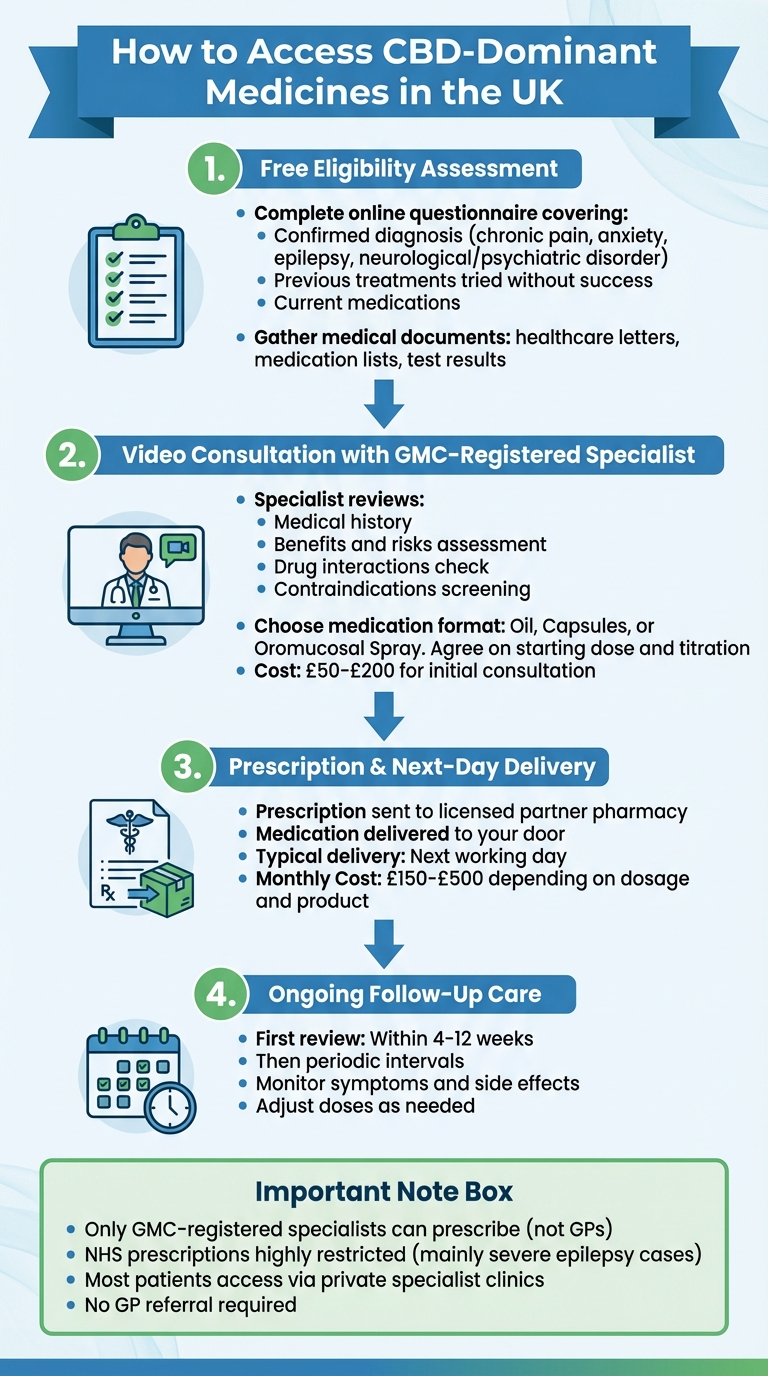
How to Access CBD-Dominant Medicines in the UK: Step-by-Step Guide
In the UK, only specialists registered with the General Medical Council (GMC) are authorised to prescribe CBD-dominant medicines. General practitioners (GPs) cannot issue these prescriptions. Since 1 November 2018, UK legislation has permitted specialists to prescribe cannabis-based medicines for specific medical conditions. However, NHS prescriptions remain highly restricted, primarily available to a small group of children with severe, rare forms of epilepsy. Most patients seeking this treatment turn to private specialist clinics.
The process starts with a free online eligibility assessment. During this step, you’ll complete a questionnaire covering your diagnosis, past treatments, and current medications. To qualify, you must have a confirmed diagnosis for a condition such as chronic pain, anxiety, epilepsy, or another neurological or psychiatric disorder. Additionally, you should have tried at least one licensed treatment without sufficient success or experienced intolerable side effects. To speed up the process, gather relevant medical documents, such as letters from healthcare providers, a list of medications, and test results.
If you meet the eligibility criteria, the next step is to schedule a video consultation with a GMC-registered specialist. During this appointment, the doctor will review your medical history, evaluate the potential benefits and risks of CBD-dominant medicines, check for possible drug interactions, and ensure there are no contraindications. If treatment is deemed suitable, you and the specialist will decide on the best format for the medication – options include oil, capsules, or oromucosal spray. Together, you’ll also agree on a starting dose and a titration plan. Once the prescription is finalised, it is sent to a licensed partner pharmacy, and the medication is typically delivered to your door the next working day.
Regular follow-up appointments are an essential part of this process. Most clinics schedule reviews within four to twelve weeks of starting treatment and then at periodic intervals. These follow-ups help monitor your symptoms, assess side effects, and adjust doses if necessary. This ongoing care ensures that the treatment remains effective and safe, providing a structured and patient-focused approach to managing your condition.

Elios Clinics follows these steps with a strong focus on patient convenience and care. They offer a free eligibility assessment to help you quickly determine whether you qualify for treatment, removing initial barriers to access. Once you’re deemed eligible, you can book a video consultation with a GMC-registered specialist at a time that works best for you. This remote option is particularly helpful for patients with mobility challenges or severe anxiety, as it eliminates the need for travel.
After your prescription is issued, Elios Clinics coordinates next-day delivery of your medication through a licensed partner pharmacy, ensuring you can begin treatment without delay. They also provide ongoing follow-up appointments to track your progress, make dose adjustments as needed, and offer continuous support throughout your treatment. This comprehensive approach ensures that patients receive more than just a prescription – they benefit from ongoing, tailored care aimed at improving their quality of life and effectively managing their symptoms.
In the UK, specialists often recommend a cautious approach when starting CBD treatment: "start low, go slow." This typically means beginning with 5–10 mg daily and gradually increasing the dose until you achieve effective relief. The goal is to identify the lowest dose that works for you, avoiding unnecessary increases.
Several factors influence the appropriate dose, including your body weight, age, liver function (which affects how CBD is metabolised), and the condition being treated. For example, chronic neuropathic pain or severe epilepsy may require higher doses than conditions like mild anxiety or sleep disturbances. If you’re taking other medications – such as antiepileptic drugs, warfarin, or certain antidepressants – your doctor may suggest starting with a lower dose and closely monitoring your progress.
During the first four to six weeks, it’s a good idea to keep a record of your dose, timing, symptoms, and any side effects. This helps guide adjustments to your treatment. Stick with each new dose for at least three to seven days to allow your body to stabilise before making any changes. Always follow your prescriber’s titration plan. If you notice side effects like drowsiness, diarrhoea, appetite changes, or mood shifts, contact your healthcare provider to discuss adjustments.
Once your dose is established, the next step is choosing the right method of administration.
CBD-dominant medicines in the UK come in various formats, each offering unique advantages:
To ensure consistent results, take your CBD at the same times each day. For sublingual oils and sprays, waiting about 15 minutes before eating or drinking may improve absorption.
Equally important is understanding and managing potential side effects.
CBD is generally well tolerated, but higher initial doses can sometimes cause mild side effects like dry mouth, fatigue, diarrhoea, reduced appetite, or nausea. Clinical trials using high-dose prescription CBD for epilepsy have shown that these side effects are often mild to moderate and improve with slower dose increases or slight reductions. At the lower doses commonly used for conditions like anxiety or chronic pain, side effects are usually short-lived and manageable.
CBD can interact with other medications by influencing liver enzymes, which may increase the levels of certain drugs in your system. This is particularly important if you’re taking antiepileptic medications, warfarin, or certain antidepressants, antipsychotics, or benzodiazepines, as these interactions can lead to increased sedation or altered drug effects. People with significant liver or kidney issues, serious heart conditions, a history of psychosis, or those who are pregnant or breastfeeding should only use CBD under close specialist supervision.
Practical precautions include having baseline and follow-up liver function tests, especially if you’re on higher doses. Regular medication reviews with your prescriber are essential to manage dosing and potential interactions effectively. During the initial dosing period, avoid alcohol and other sedatives, as these can worsen drowsiness. If you feel drowsy or sedated, refrain from driving or operating heavy machinery. Always inform your GP and other healthcare providers about your CBD treatment to ensure any potential drug interactions are monitored.
Specialist clinics, like Elios Clinics, provide structured treatment plans, including clear starting doses, titration schedules, regular monitoring, and comprehensive guidance on administration and side-effect management. This approach ensures you receive continuous and safe support throughout your treatment journey.
In the UK, the strongest backing for CBD-dominant medicines comes in the treatment of severe, treatment-resistant epilepsy. The National Institute for Health and Care Excellence (NICE) has approved the use of Epidyolex – a pharmaceutical-grade cannabidiol oral solution – as an additional treatment option for children and adults with conditions such as Lennox–Gastaut syndrome, Dravet syndrome, and tuberous sclerosis complex when standard anti-epileptic drugs have proven ineffective. Randomised controlled trials have demonstrated that Epidyolex can reduce drop-seizure frequency by 37–44% (compared to 17–22% with placebo) in Lennox–Gastaut syndrome, and convulsive seizures by 39–49% (versus 13–27% with placebo) in Dravet syndrome. Based on these results, NICE concluded that Epidyolex provides acceptable cost-effectiveness for these rare epilepsies, provided it is prescribed and monitored by specialist neurologists.
When it comes to chronic pain, however, UK guidelines are far more cautious. NICE does not recommend routine NHS prescribing of cannabis-based medicines, including CBD-dominant products, due to the limited and low-quality evidence available. Reviews have shown that pure CBD lacks strong trial support as a pain reliever, while THC/CBD combinations offer only modest benefits for neuropathic and cancer-related pain, often accompanied by a higher likelihood of side effects. A Cochrane review echoed these findings, suggesting these products should only be considered as third- or fourth-line options, after conventional treatments like anticonvulsants, antidepressants, or physiotherapy have been tried. Consequently, NHS England has restricted access to cannabis-based medicines to a small group of patients, mostly those with severe epilepsy, chemotherapy-induced nausea, or spasticity related to multiple sclerosis, and only under the care of specialist hospital doctors.
On the other hand, the UK Medical Cannabis Clinicians Society (UKMCCS) takes a more flexible approach. The organisation acknowledges that CBD-dominant medicines may be appropriate for conditions such as chronic pain, anxiety, and sleep disorders, but only after standard treatments have failed. The UKMCCS highlights the preference for CBD-dominant preparations within medical cannabis due to their lower psychoactive effects compared to THC, especially for patients prone to psychiatric issues or those who are sensitive to THC. This guidance stands in contrast to the stricter NHS policies, offering a more patient-centred approach to care.
Although clinical guidelines support CBD-dominant medicines for specific conditions, access through the NHS remains highly restricted. At present, the majority of prescriptions for cannabis-based medicines in the UK are issued privately, often through specialised medical cannabis clinics. NICE has determined that cannabis-based treatments for chronic primary pain do not meet cost-effectiveness thresholds, citing their limited impact on pain scores and the higher incidence of adverse events. These limitations further restrict NHS availability.
As a result, many patients with chronic pain, psychiatric disorders, or neurological symptoms who do not meet the NHS’s narrow criteria turn to private clinics for access to CBD-dominant medicines. Clinics like Elios Clinics play a crucial role in addressing this gap by offering services such as eligibility assessments, video consultations with GMC-registered specialists, personalised treatment plans, and next-day delivery of prescribed medications. This approach ensures patients whose symptoms have not improved with conventional therapies can access CBD-dominant treatments under medical supervision. Elios Clinics also provide ongoing support, including dose adjustments, side-effect monitoring, and documentation of treatment outcomes, working alongside existing NHS services to provide comprehensive care.
CBD-dominant medicines are now a legitimate, specialist-prescribed option for patients in the UK dealing with chronic pain, certain types of epilepsy, anxiety, and neurological conditions – especially when traditional treatments have fallen short. These prescriptions provide symptom relief with minimal psychoactive effects, making them practical for daytime use and for individuals who are sensitive to THC or concerned about feeling intoxicated. While the strongest evidence supports their use in severe, treatment-resistant epilepsy syndromes like Dravet and Lennox–Gastaut, early research hints at possible benefits for conditions such as chronic pain, anxiety, and sleep disturbances. However, these medicines should always be part of a personalised treatment plan rather than seen as a stand-alone solution.
Although access through the NHS is still extremely limited, private healthcare options allow many eligible patients to obtain CBD-dominant medicines legally and under proper supervision. This ensures that patients receive high-quality, prescription-grade products with accurate dosages. Regular monitoring by a specialist helps manage side effects, check for potential drug interactions, and fine-tune dosages based on individual responses. This level of oversight is far safer than turning to unregulated CBD products available online.
Starting with a low dose and increasing gradually under medical supervision is key. CBD can cause side effects, including fatigue, digestive issues, or changes in appetite, and it may interact with medications such as anticoagulants or antiepileptics. For these reasons, self-medicating without professional guidance is strongly discouraged. Consulting a specialist ensures any treatment is safe and properly managed.
It’s essential to have realistic expectations. CBD-dominant medicines can alleviate symptoms but are not a universal fix. When prescribed thoughtfully and integrated into a broader care plan, they offer a safe option with the potential to enhance quality of life. If you’re managing a long-term condition that hasn’t responded to other treatments, discussing CBD-dominant medicines with your GP or a specialist could be a sensible next step.
CBD-dominant medicines are available only by prescription and are specifically developed to address particular medical conditions. These treatments are strictly regulated to guarantee consistent quality, accurate dosing, and patient safety. They are prescribed by healthcare professionals who tailor the treatment to the needs of each individual.
On the other hand, over-the-counter CBD products are not held to the same rigorous standards. Their strength and quality can vary significantly, and they are not personalised to suit specific health needs. Although these products are widely accessible, they do not come with the medical guidance or customisation that prescription CBD medicines provide.
CBD-dominant medicines have gained attention for their potential to help manage chronic pain, anxiety, depression, epilepsy, and some neurological conditions.
These treatments are often sought after for their therapeutic benefits, especially when traditional methods haven’t provided adequate relief. If you’re thinking about trying CBD-dominant medicines, consulting a qualified medical professional is essential. They can create a personalised treatment plan to ensure safe and effective use tailored to your needs.
To obtain a prescription for CBD-dominant medicines in the UK, you’ll need to speak with a qualified medical professional. Begin by scheduling an appointment with a clinic that specialises in medical cannabis treatments, such as Elios Clinics.
During your consultation, the doctor will review your medical history, discuss your symptoms, and explore your treatment goals. If they decide that CBD-based medication is suitable for your condition, they’ll provide a personalised treatment plan and issue a prescription. For your convenience, the prescribed medication can be delivered straight to your doorstep.
Elios Clinics takes a patient-first approach, offering expert advice and support every step of the way to ensure your safety and comfort.